
Interior Painting
Walls, ceilings, trim and doors, patched and caulked before painting, with edges cut in by hand and furniture covered.
Drywall repair & texture
I handle drywall repair in Rowlett, TX from start to finish: patching holes and cracks, matching the texture, then repainting so the repair blends into the wall. The person who patches it is the person who paints it — me.
Most drywall damage is ordinary: a doorknob that went through, a towel bar that pulled out, nail pops, a corner that lost an argument with a couch. Patching the hole is the easy part. Making it disappear is the real job, and that depends as much on the paint as on the mud.
People ask whether painters fix drywall. Some don’t, which leaves you scheduling a drywall person, then a painter, and hoping the second one doesn’t blame the first. I do both, on older plaster walls as well as drywall, so one person is responsible for how the wall looks when it’s done.
The before photo on this page shows a vaulted living-room wall dotted with spackle over several holes and dings. The after photo is the same wall, repainted, and you can’t pick out where the repairs were. Dabbed touch-up paint rarely blends on a big, well-lit wall, so repainting corner to corner is usually what makes repairs vanish.
A flat patch on a textured wall stands out almost as much as the hole did. Orange peel is a fine spray of thinned mud that dries into small bumps. Knockdown is a heavier spatter flattened with a wide knife as it starts to set, leaving flat islands. Smooth walls have nothing to hide behind, so a patch has to be feathered wide and sanded until it disappears in sideways light.
A match comes down to the size of the spatter, how thick the mud is and, for knockdown, how long it sits before it’s knocked flat. Test on scrap first, then feather the new texture into the old so there’s no hard edge. Years of paint soften old texture, so fresh texture can look sharper beside it; priming the patch and repainting the whole wall helps even out the difference.
Spray-can texture is fine for a coin-sized spot. On anything bigger it’s hard to control, and a mismatched patch is more work to fix than the original hole was. Walls after wallpaper removal need the same care: torn drywall paper has to be sealed before any mud goes on, or it bubbles, then skimmed and textured to match.
North Texas has a lot of expansive clay. Houston Black clay, a Blackland Prairie soil found from north of Dallas to south of San Antonio, swells when it’s wet and shrinks when it’s dry; when dry, its topsoil can crack more than 4 inches wide. The ASCE Geo-Institute lists possible indoor signs of that movement, including cracks or separations in walls and ceilings, cracks at wall corners, cracks above doors and windows, and doors or windows that stick.
Drought, hot and dry weather, and extra drying on a house’s south and west sides make that movement uneven. That’s why spackle or caulk smeared into a crack rarely lasts. A proper drywall crack repair opens the crack up, tapes it, and builds thin coats of mud feathered out wide, then texture and paint to match.
Here’s where my job stops. A crack that keeps coming back or getting wider is worth having a foundation professional check. I repair drywall; I don’t do foundation work. If foundation repair is on the calendar, have it done first — lifting a slab can open new cracks — and call me for the drywall after.
Recent project
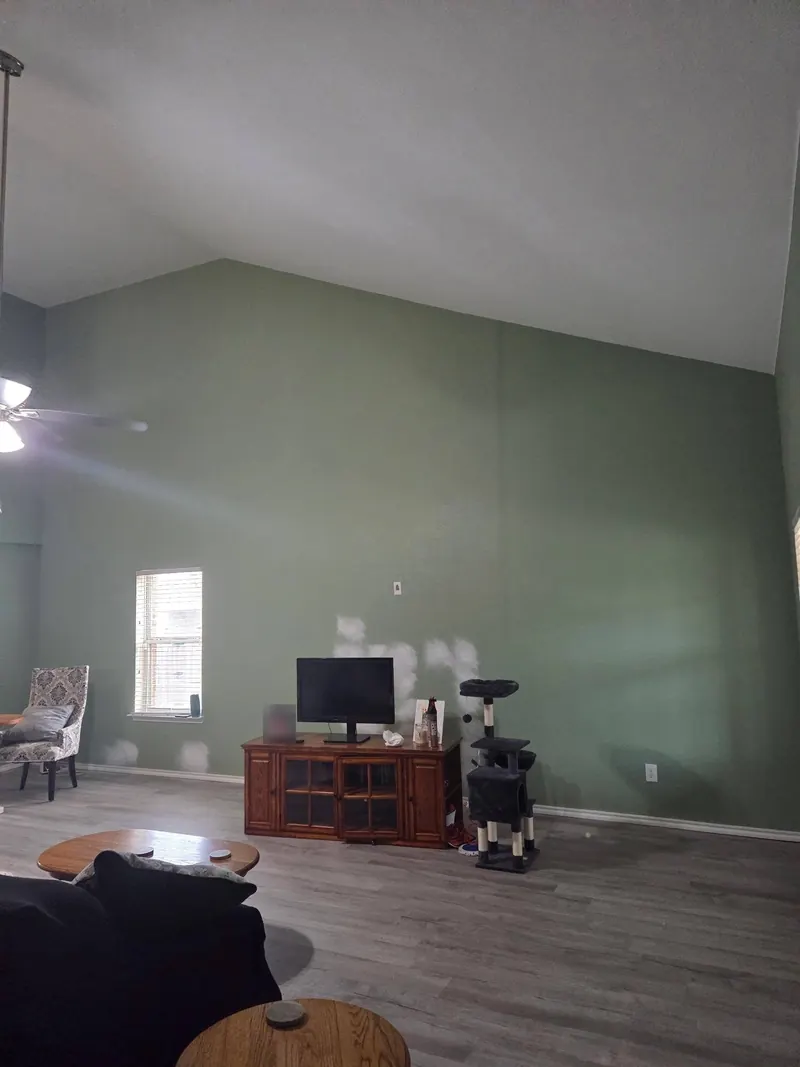 Before
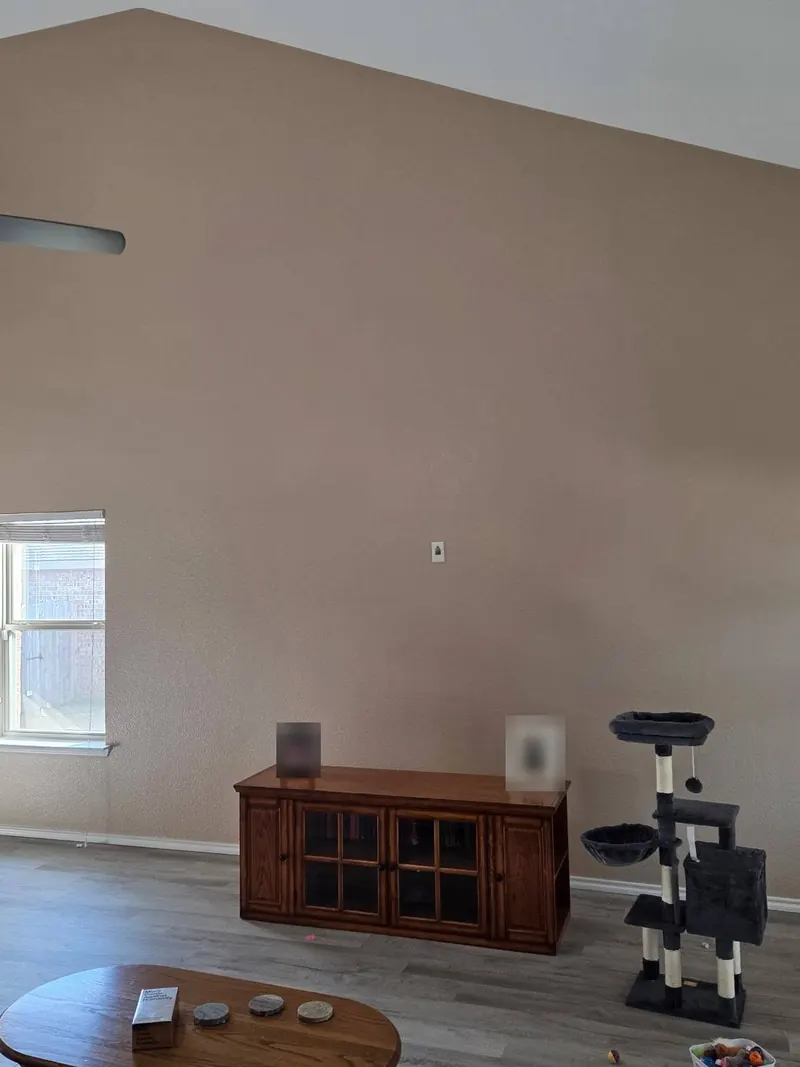 After
The process
I look at the damage with you and ask how it happened, because a doorknob hole, a water stain and a crack that keeps coming back each need a different fix. Then you get a free estimate.
I cover floors and furniture, cut out anything soft or crumbling, reset popped nails and screws, and open up cracks so tape and mud can bond.
Holes get a patch or new drywall, cracks get taped, and everything gets thin coats of mud sanded flush. Then I match the texture to the wall around it.
Patches get primed so they don’t flash through the finish, then the wall gets repainted. I clean up and look the work over with you before I leave.
FAQ
Some do, some don’t. I do: holes, cracks, water-damaged sections and texture matching are all part of my work. Because I paint the wall afterward too, you’re not lining up two trades on two schedules.
Usually, yes. Orange peel and knockdown can be matched closely once the spatter size, mud thickness and timing are dialed in and the new texture is feathered into the old; smooth walls need wide feathering and careful sanding instead. Heavily painted older texture is harder, and sometimes re-texturing a larger section blends better than a small patch.
Usually the house is still moving, and a crack that was only filled, not taped, has nothing holding it together. Cracks at wall corners and above doors and windows are among the possible shrink–swell signs the ASCE Geo-Institute lists, and its guide points to keeping soil moisture uniform next to and under the foundation as the key to reducing that movement’s effect on a house. If a crack keeps returning or getting wider, have a foundation professional check it — I repair drywall, not foundations.
It depends on the number and size of the repairs, whether there’s texture to match, how high the work is (a vaulted wall means taller ladders), and whether the whole wall needs repainting so the patches don’t show. Water damage adds steps: the leak has to be fixed first, soft drywall gets cut out and replaced, and stains need a stain-blocking primer so they don’t bleed through. The estimate is free, and I reply within 24 hours.
Some, because every patch has to be sanded flush. I cover floors and furniture and clean up after myself, and you can go about your day in the rest of the house. Joint compound has to dry between coats before it’s sanded and painted, so a repair goes in stages rather than all at once.
Sometimes. If you have leftover paint from the last job, that paint is fairly new and the sheen is flat, a primed patch can be touched up and blend. More often, especially with eggshell or satin, older paint or a big sunlit wall, the touch-up flashes, and repainting corner to corner is what hides it.
Related services
Walls, ceilings, trim and doors, patched and caulked before painting, with edges cut in by hand and furniture covered.
Wallpaper and borders stripped carefully, glue washed off, any torn drywall facing sealed, and the wall repaired and primed.
Offices, storefronts, restaurants and unit turnovers, prepped and painted after hours or on weekends around your business.
If you’ve got a hole, a crack or an old patch that never quite disappeared, call or text me at (972) 267-8208 for a free estimate — I reply within 24 hours.