
Drywall Repair & Texture
Holes, cracks and nail pops, taped and patched, with texture matched and the wall repainted so the repair disappears.
Interior painting
Interior painting in Rowlett, TX, done by the same person who answers the phone: me, Bruce Mahnken. I patch, caulk and cut in the edges myself, keep your floors and furniture covered, and clean up before I leave.
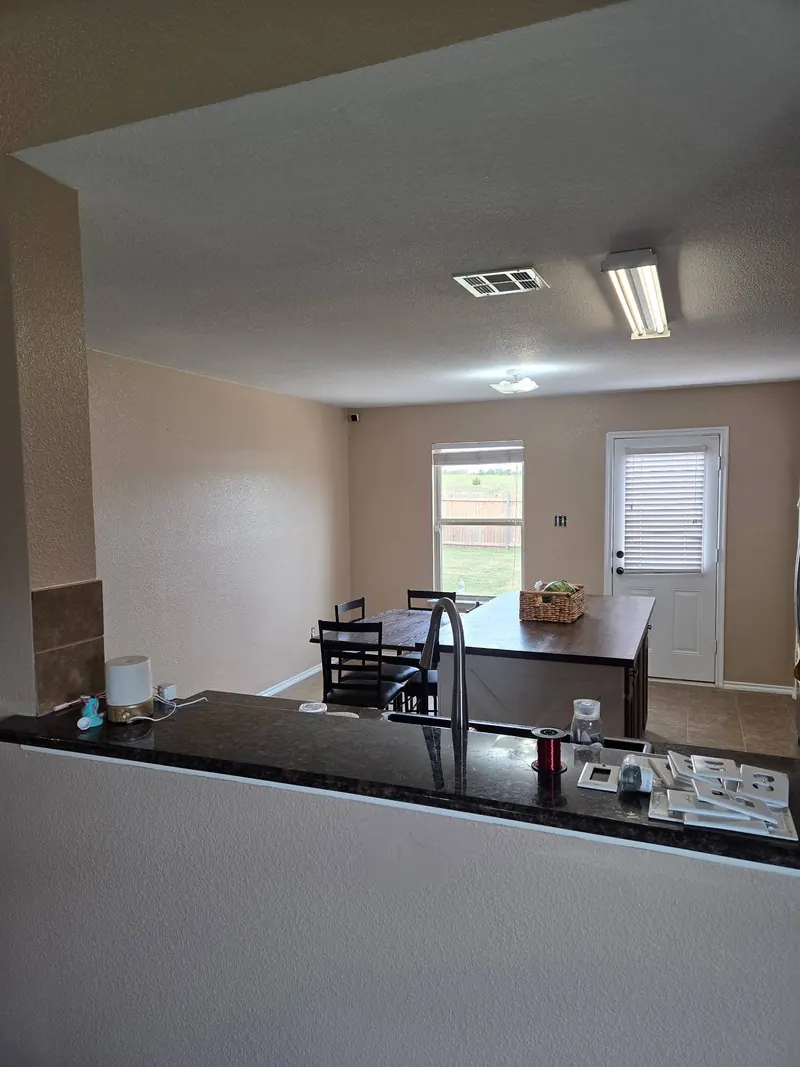
Most of a good paint job happens before the can is opened. I patch nail holes, dings and hairline cracks, sand the patches flush and spot-prime them so they don’t show through the finish coat. In a home built before 1978, sanding can stir up lead from older paint layers, so I’m EPA lead-safe (RRP) certified and use lead-safe work practices whenever old paint gets disturbed. Gaps where trim meets the wall get caulked. That’s the difference between a crisp line and one that looks shaky from across the room.
Then I go in order: ceilings first, then walls, then trim and doors, so drips and roller spatter mostly land on surfaces I haven’t painted yet. Edges along ceilings, corners and trim are cut in with a brush before the walls are rolled. Floors and furniture stay covered the whole time.
The two-story living room below went from sage green to a warm beige. Rooms that tall take ladders, extension poles and patience, and a full color change like that one usually needs more coverage than a same-color refresh. I’ll tell you what your walls need before we start.
Color gets the attention, but sheen decides how a wall holds up. Flat and matte do the most to hide bumps and old patches, which is why they’re the usual pick for ceilings and a lot of living and dining rooms. The trade-off is that they don’t stand up to scrubbing as well as shinier finishes.
Eggshell and satin are the everyday middle ground for bedrooms, hallways and family rooms: easier to wipe down than flat, with eggshell a little better at hiding small flaws. Kitchens, bathrooms and kids’ rooms do better in satin or semi-gloss, and trim and doors usually get semi-gloss so fingerprints and scuffs wash off.
If you’re stuck on color, I’m glad to talk it through. If you’ve already picked a specific color from a particular brand, that’s the color you’ll get. The color visualizer is a quick way to narrow the list before you buy samples.
Summer here is rough on outside work. NOAA’s 1991–2020 normals for DFW Airport count about 20 days a year at 100°F or hotter, and paint makers say to keep exterior coatings out of direct sun and to paint only when the surface is more than 5°F above the dew point. Inside, with the A/C or heat running, none of that is a factor, so I paint interiors year-round.
That makes the hottest stretch of the year a good time for the living room. If you’re planning both, the inside can go first and the exterior can wait for milder spring or fall weather. HOA color rules generally cover the outside of the house, not the inside, so the colors in here are your call.
Walls in this part of Texas also move a little. Clay soil that swells and shrinks with the weather tends to show up indoors as hairline cracks at corners and over door frames. I patch and prime those as part of normal prep. Bigger damage, and cracks that keep coming back, are a drywall repair job.
Recent project
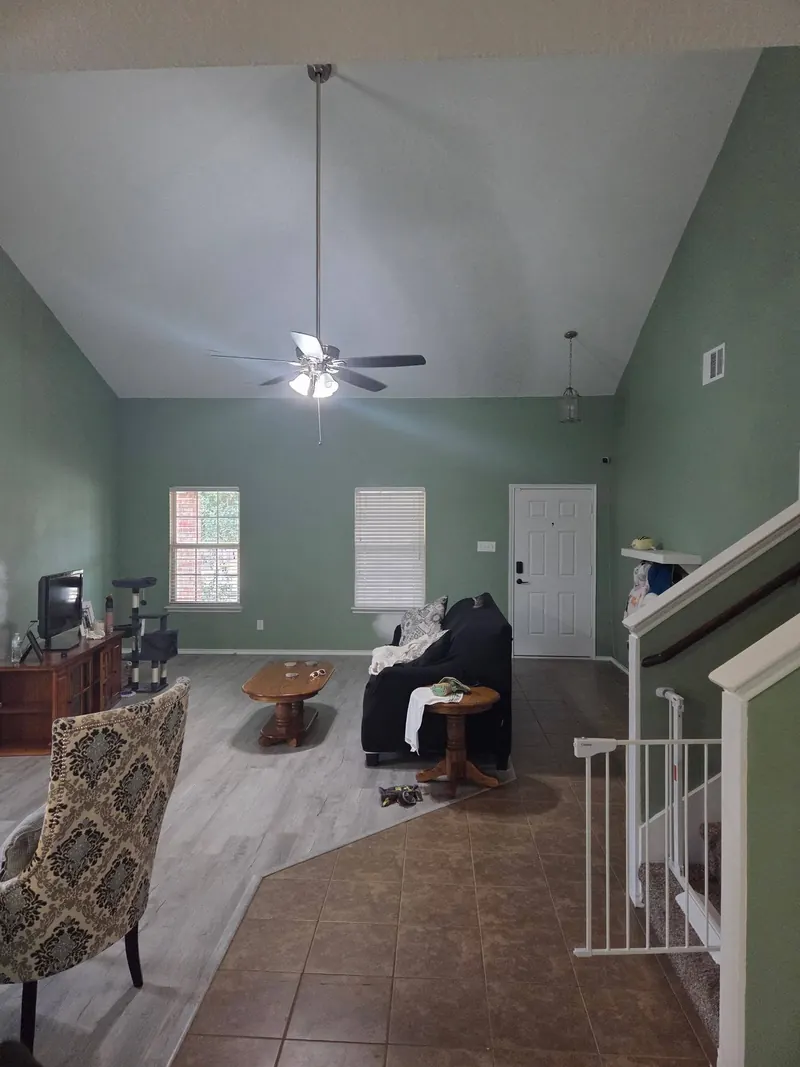 Before
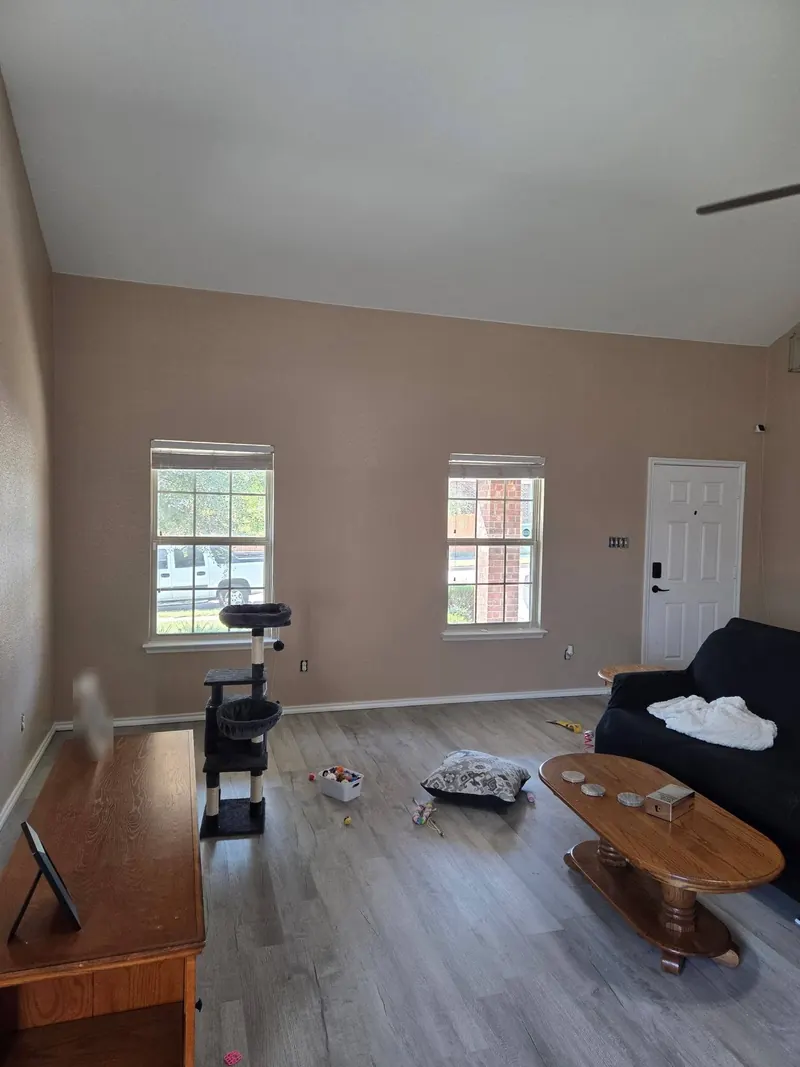 After
The process
I come look at the rooms, note what needs repair and talk through colors and sheens with you. The estimate is free, and you’ll hear back from me within 24 hours of reaching out.
Floors and furniture get covered first. Then I patch, sand and spot-prime the repairs and caulk open gaps in the trim.
I brush the edges along ceilings, corners and trim, then roll the walls. Ceilings go first, walls next, trim and doors last.
I pick up the covers, clean up after myself and walk the rooms with you to look over the work before I call it done.
FAQ
There’s no one price, because it depends on the room. The big factors are how much wall and ceiling there is, ceiling height (a two-story room takes a lot more ladder work), how much patching the walls need, how many colors you want, whether trim and doors are included, and whether you’re going from dark to light. I’ll look at the rooms and give you a free, no-obligation estimate.
No, not for a normal interior job. You can stay home and keep living around the work. The room I’m working in is off-limits while the paint is wet, so plan on keeping pets and kids out of it.
Take down wall art, clear off shelves and put away anything breakable. Whatever stays in the room gets covered along with the floors, and we can plan around the bigger furniture when I come out for the estimate.
Yes, and the living-room project on this page is one example. A big color change, especially dark to light, can take a primer coat or an extra finish coat to cover evenly, and I’ll tell you up front if your walls need it.
Yes. Nail holes, dings and small cracks are part of the normal prep on an interior job. Bigger holes, water damage and texture matching are covered on my drywall repair page.
Longer than exterior paint, since it isn’t baking in the Texas sun, but it depends on traffic. Bedrooms and formal rooms can go many years, while hallways, kids’ rooms and the wall behind the kitchen table show wear first. Picking the right sheen for each room is one of the easiest ways to keep it looking good longer.
Related services
Holes, cracks and nail pops, taped and patched, with texture matched and the wall repainted so the repair disappears.
Kitchen cabinets and bath vanities, degreased, sanded and primed, then painted or restained in thin, even finish coats.
Wallpaper and borders stripped carefully, glue washed off, any torn drywall facing sealed, and the wall repaired and primed.
Tell me which rooms you’re thinking about, and I’ll get back to you within 24 hours to set up a free estimate.